The red rot on this trumpet’s leadpipe is pretty gnarly. This means that the zinc has separated from the copper in the brass, leaving these little spots of weak copper that will eventually cause holes or tears in the brass. Since there’s not much we can do for it at this point, I’m replacing the leadpipe entirely.

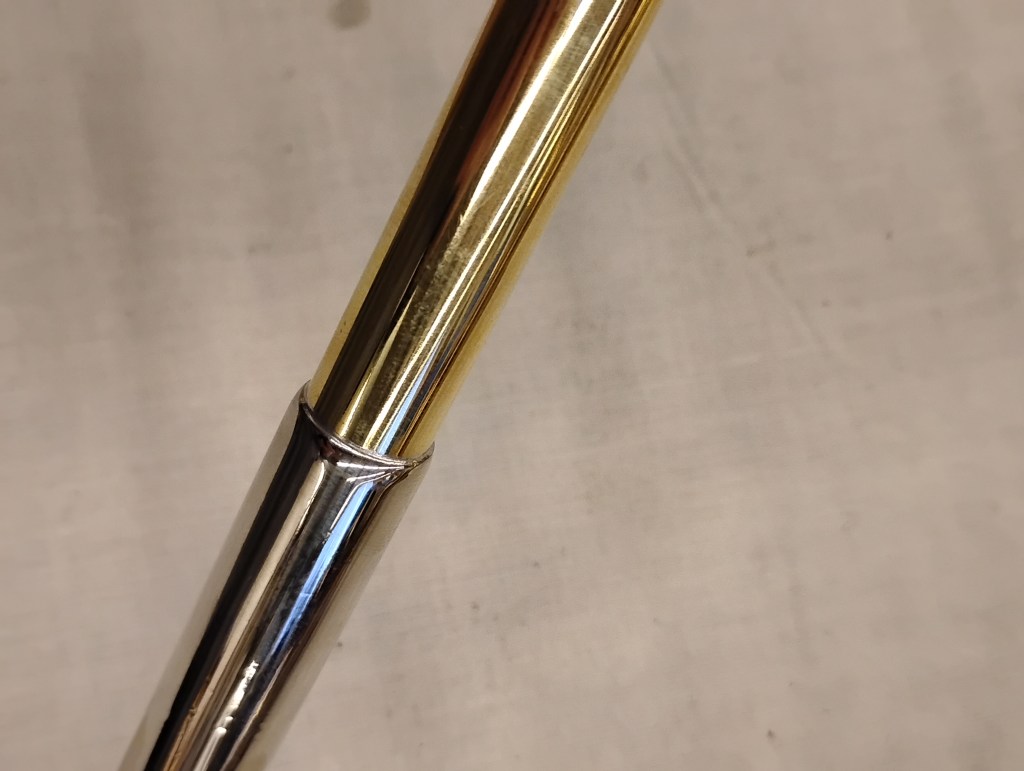
This was one of the most involved projects we’ve done yet, and it was very cool! We unsoldered the leadpipe assembly from the braces holding it in place, then for practice we also took off the braces from the rest of the trumpet. I unsoldered the outer main tuning slide from the leadpipe, and did the same for the mouthpiece (that one was really hard, it was very stuck). I replaced the corroded leadpipe with a new universal part. I hadn’t intended to replace the mouthpiece receiver too, but the old one was damaged by pliers while trying to get it unsoldered. I trimmed the new leadpipe to reach a specific diameter at one end and a specific length at the other, then reassembled it by flaring and shimming the ends. And it’s soldered together again! This is a nice end result.
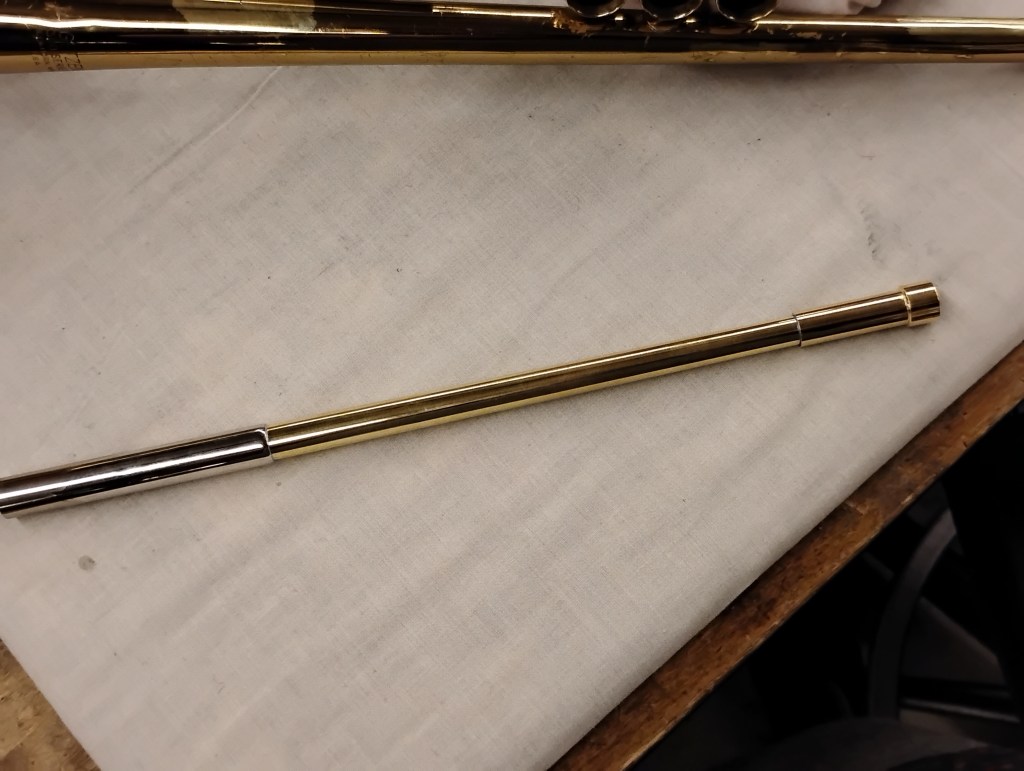
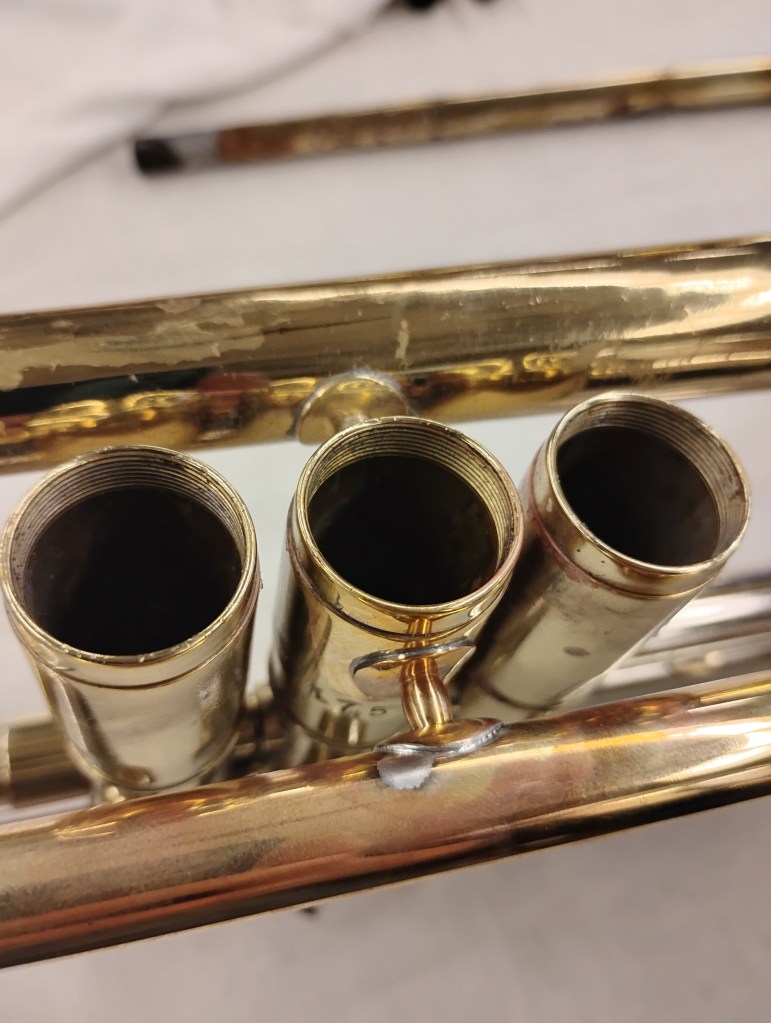
After the leadpipe is reassembled, I can work on putting it back on the trumpet. After making sure the main tuning slide isn’t twisted or bent, I used it as a guide for where the leadpipe will rest. I can sandwich the brace in there (after some work to adjust the old brace to the new leadpipe) and solder it without any fixtures. No fixtures means no tension, which makes a good horn!
 Dettloff Music and Repair
Leave a comment